CCA Treated Poles
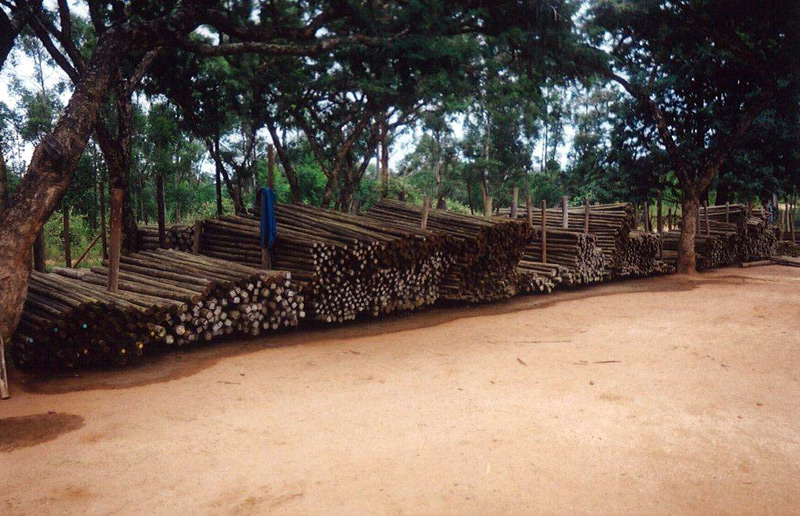
The inherent properties of wood are enhanced by modern forestry and preservation technologies. The species of trees that become poles are grown in managed timberlands to maximise their desirable characteristics.
Chromated copper arsenate (CCA) is a water-borne preservative with a history of over 60 years of safe use — it was invented in 1933. CCA-treated poles have gained in popularity as new formulations and favourable economics prompted purchasers to choose this waterborne treatment more frequently. Part of the reason for this ongoing demand involves the features of a CCA-treated pole: the treatment is low in conductivity, low in corrosivity, and does not impair the bending characteristics of the wood.
Poles properly treated with the newer oxide formulations of CCA are expected, based on ongoing field and service tests, to last forty years and more. The complex chemical reaction during pressure impregnation results in the formation of insoluble chromates of copper and arsenic in the wood, making it highly resistant to rot, decay and termite attack.
Rhino Thatch Tile
Beautiful natural stone-coated Rhino Thatch tile gives your home or lapa a completely new look with its gorgeous finish. The tiles are designed to mould around the contours of your roof, and can be used for new roofs, re-roofing over IBR or corrugated iron, to replace thatch, or over thatch for extra protection.
Installation
- Requires fewer timber battens, reducing cost
- Quick and easy installation
- Burglar proof
Warranty & Fire Risk
- 20-year surface coating warranty (inland)
- 30-year steel substrate warranty (inland, T&Cs apply)
- Fire resistant — can reduce insurance costs
Our tiles won't fade thanks to their natural stone coat, resulting in low maintenance. They're also lightweight and easy to transport.
Cape Reeds
Thamnochortus — commonly known as Cape Reeds or restios — is very common in the Western Cape mountains, growing well on dry, gravelly slopes. The genus has 13 species, most of which thrive in coastal areas.
Some species grow large and are commonly used to thatch houses; T. insignis in particular is prized for this purpose because of its very long culms. Another species, T. nutans, is the exception — found only above 600m and endemic to Table Mountain and the Constantiaberg.
We supply quality Cape Reed for thatch roofing, along with Micon Thatchsayf treatment for fire protection.
Installing Wooden Garden Edging
A step-by-step guide from the Houtkraal team.